Optimizing Hydrogen Production in Solar Electrolyzers with Real-Time Control Systems
Introduction
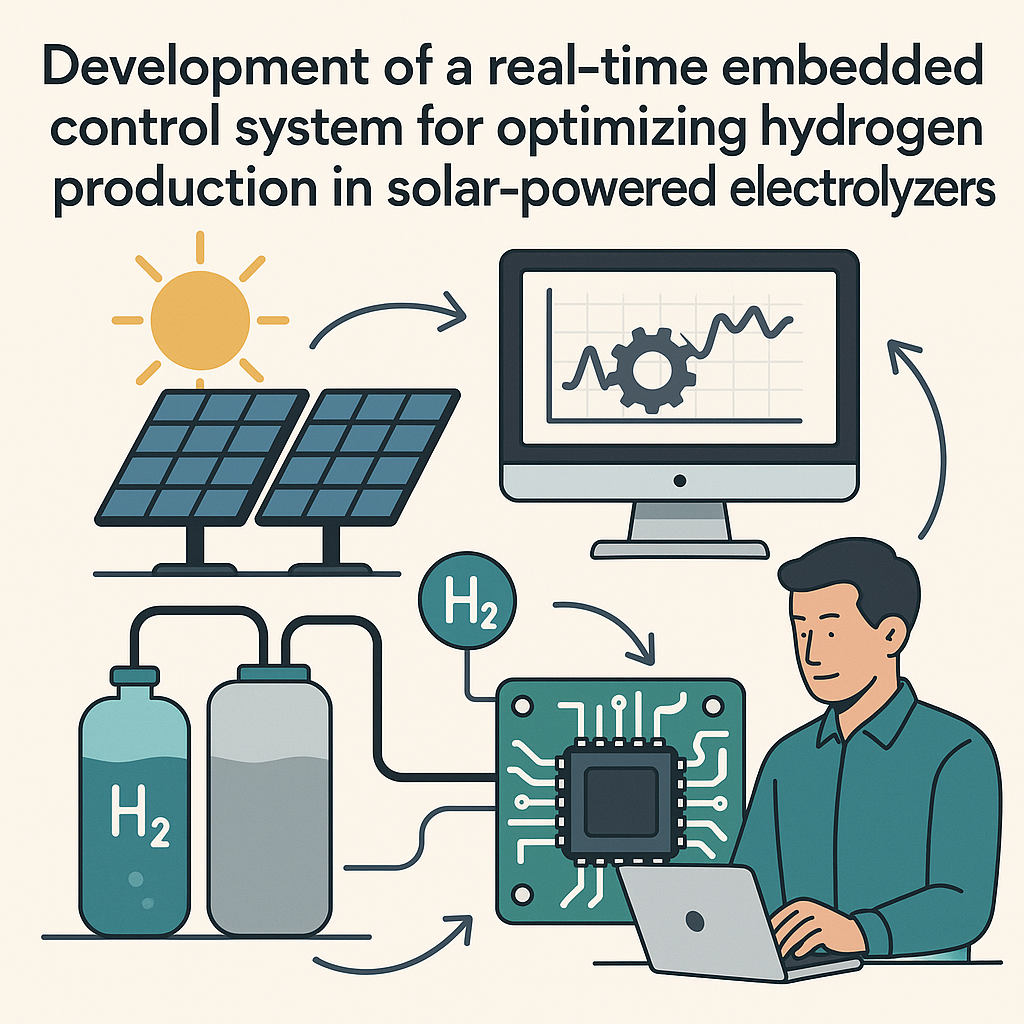
The quest for sustainable energy sources has led to significant advancements in hydrogen production technologies, particularly in the realm of solar-powered electrolyzers. This blog post delves into the development of a real-time embedded control system designed to optimize hydrogen production in these systems. By integrating advanced control strategies and real-time monitoring, we can enhance efficiency, reduce costs, and contribute to a greener future.
Understanding Solar-Powered Electrolyzers
Solar-powered electrolyzers utilize solar energy to split water into hydrogen and oxygen through the process of electrolysis. This technology harnesses renewable energy to produce hydrogen, which can be used as a fuel or energy storage solution. Key components of solar-powered electrolyzers include:
- Photovoltaic (PV) Panels: Convert sunlight into electricity.
- Electrolyzer: Uses electricity to perform electrolysis.
- Water Supply: Provides the necessary water for the electrolysis process.
- Control System: Monitors and optimizes the entire system performance.
The Role of Embedded Control Systems
Embedded control systems play a crucial role in optimizing the performance of solar-powered electrolyzers. They allow for real-time monitoring and control of various parameters, ensuring efficient hydrogen production. Key functions of the embedded control system include:
- Data Acquisition: Collects data from sensors monitoring parameters such as voltage, current, temperature, and water levels.
- Real-Time Processing: Analyzes data instantly to make quick adjustments to the system.
- Feedback Control: Uses control algorithms to maintain optimal operating conditions.
- Communication: Interfaces with external systems for remote monitoring and control.
Designing the Embedded Control System
The design of an embedded control system for optimizing hydrogen production involves several key steps:
- System Requirements: Identify the specific requirements for the control system, including the types of sensors and actuators needed.
- Hardware Selection: Choose appropriate microcontrollers, sensors, and communication modules that can handle the processing and data exchange demands.
- Software Development: Develop software algorithms for data processing, control logic, and user interface.
- Testing and Validation: Rigorously test the system under various operating conditions to ensure reliability and performance.
Control Strategies for Optimization
Implementing effective control strategies is crucial for maximizing hydrogen production. Some strategies include:
- Proportional-Integral-Derivative (PID) Control: A common control algorithm that adjusts system inputs based on the error between desired and actual outputs.
- Model Predictive Control (MPC): Uses a model of the system to predict future outcomes and optimize control actions accordingly.
- Fuzzy Logic Control: Incorporates expert knowledge to handle uncertainties and nonlinearities in the system.
Real-Time Monitoring and Data Analysis
Real-time monitoring is essential for maintaining optimal performance in solar-powered electrolyzers. The embedded control system should provide:
- Live Data Visualization: Display key performance indicators (KPIs) such as hydrogen production rate, energy consumption, and system efficiency.
- Alerts and Notifications: Notify operators of abnormal conditions or potential failures.
- Data Logging: Record historical data for analysis and performance evaluation.
Challenges in Development
While the development of a real-time embedded control system offers numerous benefits, it also presents several challenges:
- Integration with Existing Systems: Ensuring compatibility with existing hardware and software can be complex.
- Scalability: Designing a system that can adapt to varying production capacities and configurations.
- Cost Constraints: Balancing advanced features with budget limitations.
Conclusion
The development of a real-time embedded control system for optimizing hydrogen production in solar-powered electrolyzers represents a significant step towards sustainable energy solutions. By leveraging advanced control strategies, real-time monitoring, and data analysis, we can enhance the efficiency and reliability of hydrogen production. As technology continues to evolve, these systems will play a pivotal role in the transition to a cleaner, hydrogen-based energy economy.